Revolutionizing Sales Cycles: A Comprehensive Guide to CRM Software for Sales Automation

#
Introduction


In the contemporary era of hyper-competition and rapid digital transformation, the efficacy of a sales department is no longer measured solely by the charisma of its representatives, but by the sophistication of its systems. Customer Relationship Management (CRM) software, once merely a digital Rolodex, has evolved into a robust ecosystem designed to streamline, track, and optimize every facet of the sales lifecycle. At the heart of this evolution lies ‘Sales Automation’—a technological imperative that allows organizations to eliminate repetitive tasks, minimize human error, and focus resources on high-value human interactions.
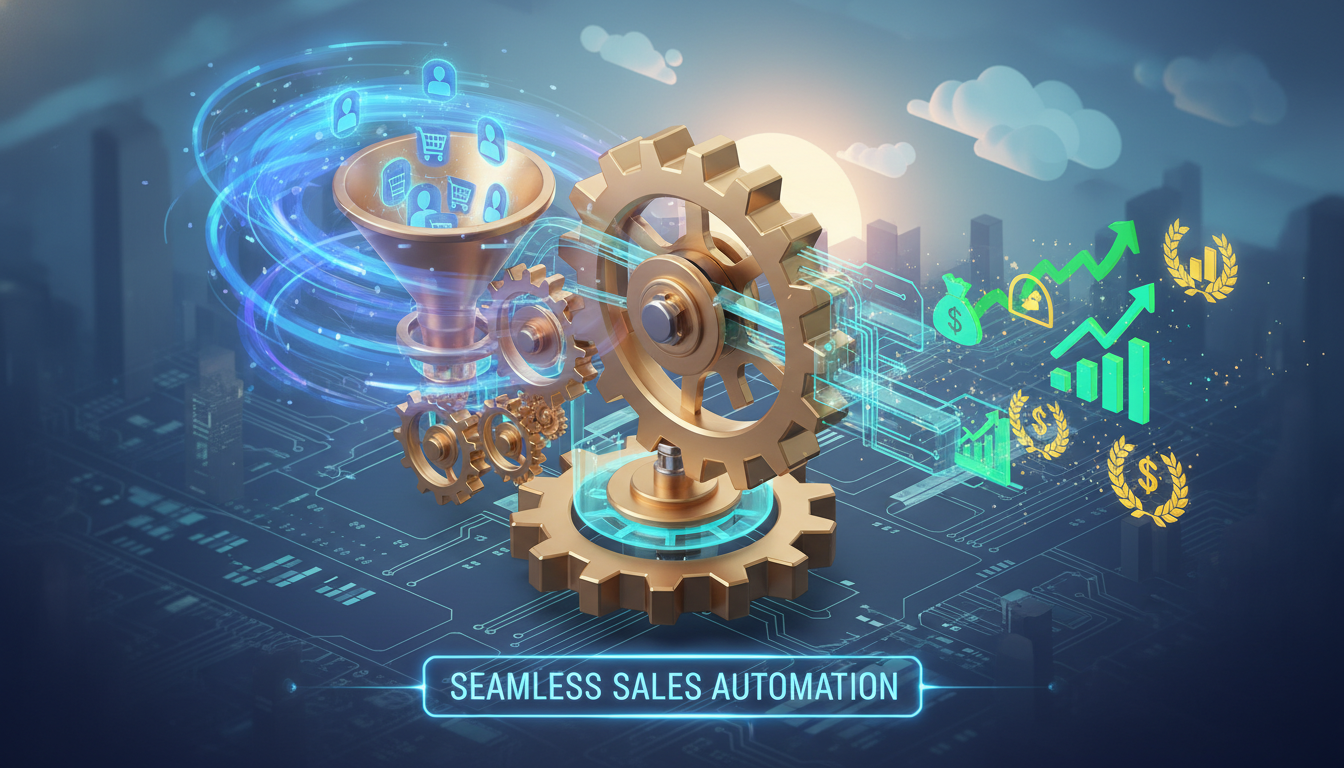
Sales automation within a CRM context refers to the use of software to automate the manual, time-consuming tasks associated with the sales process. This includes lead prioritization, email follow-ups, data entry, and performance reporting. By integrating these functions, businesses can create a seamless ‘revenue engine’ that operates with surgical precision, ensuring that no lead is neglected and every opportunity is nurtured to its fullest potential.
The Anatomy of Sales Automation Features
To understand the profound impact of CRM-driven automation, one must dissect the key functionalities that constitute a high-performing system.
1. Lead Management and Scoring: Automation tools can instantly capture leads from various sources—websites, social media, and advertisements. Beyond mere capture, sophisticated CRMs employ lead scoring algorithms. These algorithms assign values based on a prospect’s behavior and demographic data, ensuring that the sales team focuses their efforts on ‘hot’ leads that are statistically more likely to convert.
2. Email and Communication Sequences: Perhaps the most visible benefit of automation is the ability to maintain consistent communication. Automated sequences ensure that a prospect receives a personalized follow-up minutes after an inquiry. These workflows can be branched; if a recipient opens an email but does not click a link, the system can trigger a specific follow-up different from the one sent to a recipient who ignored the email entirely.

3. Workflow Automation: This involves internal process optimization. For instance, when a deal reaches a specific stage (e.g., ‘Contract Sent’), the CRM can automatically notify the legal team, generate an invoice in the accounting software, and create a task for the account manager to follow up in 48 hours. This eliminates the ‘administrative friction’ that often stalls deal momentum.
Strategic Benefits: Beyond Productivity
While the primary allure of sales automation is productivity, its strategic advantages extend far deeper into the organizational fabric.
Data-Driven Decision Making
Automation ensures that data is captured consistently and accurately. When data entry is manual, it is often incomplete or subjective. Automated systems log every interaction—calls, emails, and meetings—providing leadership with a ‘single version of truth.’ This data granularity allows for precise forecasting, enabling CFOs and Sales Directors to predict quarterly revenue with unprecedented accuracy.
Enhanced Customer Experience
Counterintuitively, automation can lead to a more personalized customer experience. When a CRM handles the ‘reminders,’ sales representatives have more mental bandwidth to research their prospects and engage in meaningful, consultative selling. Furthermore, automation ensures that customers receive timely responses, which is a critical factor in trust-building during the early stages of a business relationship.
Scalability and Consistency
A manual sales process is difficult to scale. As the volume of leads increases, the quality of follow-up inevitably plateaus or declines. Automation provides the infrastructure to handle thousands of leads with the same level of attention as ten leads. It also ensures that every salesperson, whether a veteran or a new hire, follows the company’s proven ‘best practice’ sales methodology.
Overcoming the Hurdles of Implementation
Despite the clear advantages, the transition to an automated CRM environment is not without its challenges. Success requires more than just a software license; it requires a shift in organizational culture and strategy.
Data Quality and Integrity
An automated system is only as effective as the data it processes. ‘Garbage in, garbage out’ remains a foundational truth in CRM management. Before automating workflows, organizations must undergo a thorough data cleansing process to ensure that duplicate records are merged and obsolete information is purged.
The Risk of Over-Automation
There is a delicate balance between efficiency and alienation. Over-automating can lead to a ‘robotic’ brand perception. Prospects can often sense when they are being navigated through a cold, impersonal sequence. The most successful organizations use automation to facilitate human connection, not to replace it. Identifying the ‘pivot points’ where a human must step in is crucial to maintaining brand integrity.
User Adoption and Training
Resistance to change is a natural human tendency. Sales teams may view CRM automation as ‘micromanagement’ or a threat to their autonomy. Overcoming this requires transparent communication about how the tool benefits the salesperson (e.g., hitting quotas faster) rather than just how it benefits the corporation. Comprehensive training and a phased rollout are essential for high adoption rates.
The Future: Artificial Intelligence and Hyper-Automation
The trajectory of CRM software is increasingly intertwined with Artificial Intelligence (AI). We are moving from ‘reactive’ automation to ‘predictive’ automation. Future CRMs will not just automate the task of sending an email; they will use AI to draft the email based on the prospect’s personality type and the sentiment of previous interactions. Predictive analytics will identify which customers are at risk of churning before they even realize they are unhappy, allowing sales and success teams to intervene proactively.
Conclusion
CRM software for sales automation is no longer an optional luxury for the elite enterprise; it is a fundamental requirement for any business seeking sustainable growth in a digital-first economy. By bridging the gap between data management and active selling, automation empowers sales teams to operate at their highest potential. While the implementation phase demands careful planning and cultural alignment, the long-term ROI—manifested in shorter sales cycles, higher win rates, and enhanced customer loyalty—is indisputable. In the final analysis, the goal of sales automation is to handle the mechanics of the sale so that humans can handle the relationship.